
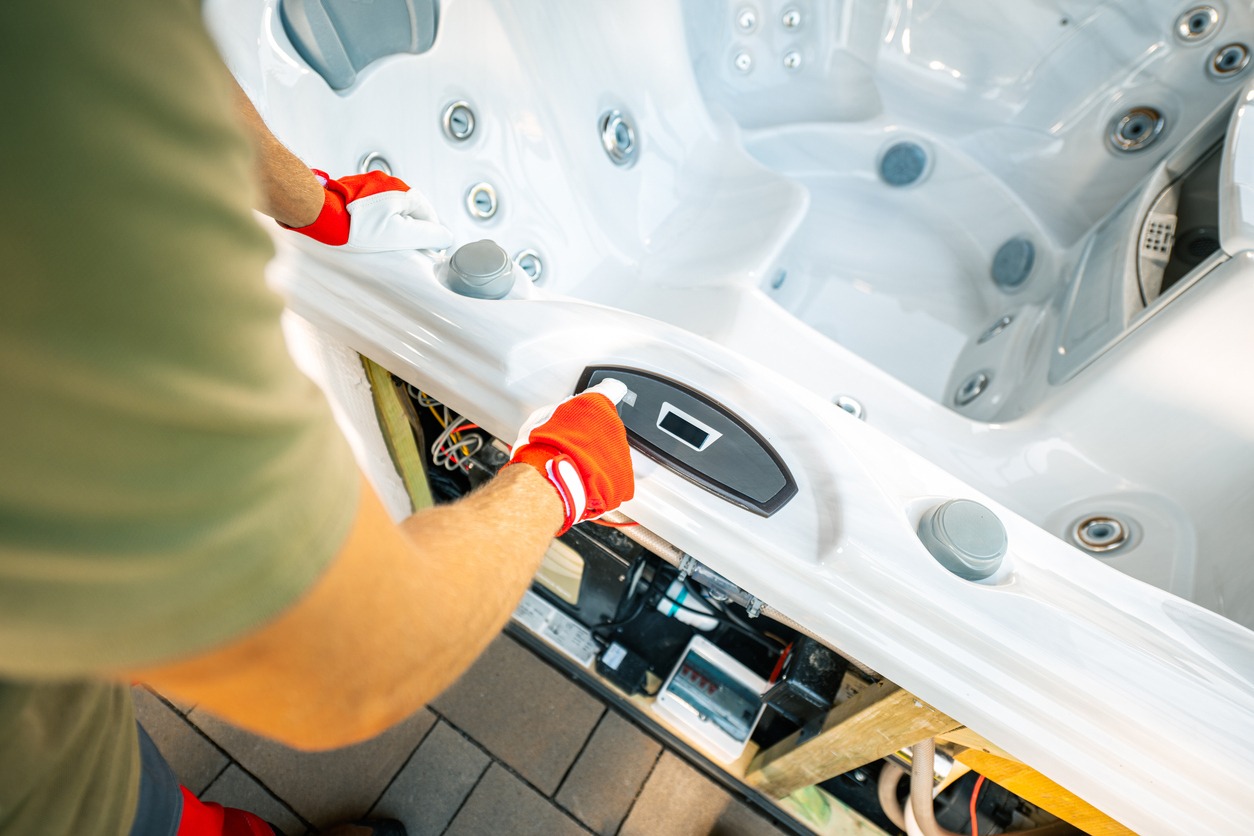
A lot of buyers come in asking about saltwater hot tubs because they heard the maintenance is easy. That is mostly true. But easy is not the same as nothing. Owners who assume the system takes care of itself end up with cloudy water, a worn-out salt cell, or a service call they did not expect. This guide covers what the routine for saltwater hot tub maintenance actually looks like, what Northern Arizona’s water conditions mean for your spa, and when to call us instead of troubleshooting on your own. If you’re new to saltwater maintenance on a saltwater hot tub, start here.
Your Saltwater Hot Tub Maintenance Schedule
If you want a quick reference, here it is. Everything else in this article explains the why behind each task.
| How Often | What to Do |
| Weekly | Test pH, total alkalinity, and free chlorine. Check the system display for alerts. Rinse the filter if the spa was used heavily. |
| Monthly | Inspect and clean the salt cell if scale has built up. Test salt level and top up if needed. Deep-clean the filter with a filter cleaning solution. Test calcium hardness. |
| Every 3 to 4 months | Shock the water to clear buildup from heavy use. Run a full water chemistry check. |
| Every 1 to 4 years | Replace the salt cell when output drops or a persistent error appears after cleaning. |
| Annually | Replace the filter cartridge. |
That is the routine for simple saltwater maintenance. The saltwater system handles sanitizer production automatically, so you are not adding chlorine manually every week. You are still testing the water, keeping things balanced, and checking on the salt cell.
What Northern Arizona Owners Need to Know First
This is the part most online guides skip, and it is the most important thing for buyers in our area.
Prescott Valley, Cottonwood, and most of Northern Arizona have hard water. That means your tap water is high in calcium and magnesium. When that water runs through your salt cell repeatedly, calcium builds up on the internal plates. That buildup reduces how well the cell produces chlorine, and it can shorten the cell’s life if you are not staying on top of it.
A salt cell that lasts four years in a soft water city may need more attention here, sooner. The fix is straightforward: inspect the cell monthly, use a pre-filter on your hose when filling the spa, and use a sequestering agent after every refill to stop minerals from depositing inside the system.
Not sure what your water looks like? Bring a sample into our Prescott Valley or Cottonwood showroom. We test it in-store at no charge and tell you exactly where to start.
For a deeper look at water care across all spa types, our hot tub water care guide walks through testing and balancing for Northern Arizona conditions.
Weekly: The Checks That Keep Problems Small
Testing once a week takes about five minutes and catches most issues before they turn into bigger problems.
Check your pH first. Saltwater systems naturally push pH upward over time because of how the sanitizer is produced. If pH drifts too high, the chlorine in your water becomes less effective even when the levels look correct. A quick test and a small adjustment keep this in check.
Check the free chlorine to confirm the system is producing correctly. If the reading is low despite a normal salt level, the most common causes are high bather load from recent use, pH being out of range, or early calcium buildup on the salt cell.
Rinse the filter if the spa was used three or more times that week. A quick rinse with a garden hose keeps the water circulating properly between deeper monthly cleans.
Monthly: The Tasks Most Owners Skip
This is where most saltwater spa problems start.
Clean the filter properly. Rinsing removes surface debris, but it does not remove the oil, lotion, and mineral buildup that settles into the filter material over time. Once a month, soak the filter in a cleaning solution designed for hot tub filters. Rinse it thoroughly before putting it back.
Check the salt cell. Remove it, take a look at the internal plates, and clean off any white or gray calcium scale you see. In Northern Arizona, doing this monthly rather than waiting for a system alert makes a real difference in how long the cell lasts.
Test your salt level and add pool-grade spa salt if it has dropped. Always add in small amounts and test again after the pump runs for 30 minutes. Adding too much at once is harder to fix than adding too little.
Test calcium hardness. If it is creeping up, a sequestering agent helps prevent that calcium from ending up on your cell plates and spa surfaces.
How to Clean a Salt Cell Without Overcomplicating It
You do not need to be a technician to clean a salt cell. You do need to follow the steps in your owner’s manual for removing it, since the process is slightly different depending on your system.
Once it is out, look at the plates inside. If you see white or gray deposits, that is calcium scale. Light buildup can be rinsed off with a garden hose and a soft brush. Heavier buildup may need a short soak in a diluted acid solution. Your owner manual or our service team can confirm the right approach for your specific system.
After cleaning, reinstall the cell, restart the spa, and test the water the next day to confirm it is producing chlorine correctly.
If the cell is not producing after a cleaning, or the error clears but comes back quickly, that is when to call us rather than keep troubleshooting.
After Guests, Monsoons, and Cottonwood Season
A few Northern Arizona situations that deserve their own mention.
After a party or heavy use: A high bather load puts more organic material into the water than the system is used to handling. Shock the water after guests leave, rinse the filter within 24 hours, and test the water the following morning. If it is still cloudy 48 hours later, the water may need to be drained and refilled.
After a monsoon or dust storm: Rain dilutes your salt concentration and throws off the water chemistry. Debris and dust enter the water quickly in Northern Arizona storm conditions. Test and rebalance within 24 hours, and rinse the filter the same day as the storm.
During cottonwood season: Cottonwood seeds clog filters faster than anything else we see in our area. Rinse the filter every 2 to 3 days during peak cottonwood season, rather than waiting until the end of the week. Our article on how to deal with cottonwood fluff covers this in more detail.
When Something Goes Wrong
Most saltwater problems have a straightforward fix. Here are the most common ones we hear about.
| What You See | Most Likely Cause | What to Do |
| Cloudy water | Buildup from heavy use or high total dissolved solids | Shock the water; drain and refill if the problem persists |
| Low chlorine with normal salt reading | pH out of range or calcium scale on the cell | Adjust pH; inspect and clean the cell |
| Chemical smell from the water | Chloramine buildup from heavy use | Shock the water; rinse the filter |
| pH keeps climbing | Normal behavior in saltwater systems | Add pH reducer regularly; this is expected |
| System alert that will not clear | Low salt, scale on the cell, or end of cell life | Check salt level; clean the cell; call us if it persists |
| Foamy water | Body oils or lotion buildup | Shock the water; clean the filter; drain if foam keeps returning |
If you have run through the table and the issue persists after 48 hours, bring in a water sample or schedule a service visit. Some problems need a technician.
Which Saltwater System Is Easiest to Maintain?
If you want the simplest ownership experience, a spa with a manufacturer-installed salt system is easier to manage than adding an aftermarket unit to an existing spa.
Our Hot Spring hot tub collections include models with a dedicated saltwater system that shows salt level, flow status, and output on the spa display. You can see what the system is doing without running a test.
Our Caldera hot tub collections include models with a built-in salt system that extends how long the water stays fresh before a drain-and-refill is needed.
Both are worth comparing in person. Our team can walk you through what the maintenance routine actually looks like for each model before you decide.
Talk to Our Team Before and After Purchase
The owners who have the smoothest experience with a saltwater spa are usually the ones who got a proper walkthrough at delivery. We go through the maintenance schedule with every new owner at both our Prescott Valley showroom and our Cottonwood showroom.
If you already own a saltwater spa and the water is giving you trouble, bring a sample in. We test it in-store, tell you exactly what it needs, and help you get back on track without guessing.
Our owners’corner service team handles water testing, salt-cell service, filter replacement, and everything in between. If you are still comparing saltwater options before buying, our full guide to saltwater hot tubs covers system types, compatibility, and what to ask your dealer before you sign anything. It also outlines basic saltwater maintenance so you know what to expect day to day
Frequently Asked Questions
1. Are saltwater hot tubs maintenance-free?
No. Salt systems automate sanitizer production, but you still have a simple routine to follow. Weekly, test pH, total alkalinity, and free chlorine, check the system display for alerts, and rinse the filter if the spa saw heavy use. Monthly, deep-clean the filter, inspect and clean the salt cell for calcium scale, test your salt level and top up carefully, and test calcium hardness. Every 3–4 months, shock the water and run a full chemistry check. Replace the filter annually, and expect to replace the salt cell every 1–4 years when output drops or errors persist after cleaning.
2. Why does Northern Arizona’s hard water matter for saltwater hot tubs?
Hard water speeds up calcium scale buildup on your salt cell, lowering chlorine output and shortening cell life if ignored. To stay ahead of it: use a hose pre-filter when filling, add a sequestering agent after every refill, inspect and clean the cell monthly (don’t wait for an alert), and test calcium hardness monthly. Not sure where your water stands? Bring a sample to our Prescott Valley or Cottonwood showroom for free in-store testing and exact recommendations.
3. What should I do each week to keep my saltwater spa clear?
In about five minutes, you can prevent most problems:
- Test pH first (salt systems tend to push pH upward; high pH weakens chlorine’s effectiveness).
- Test free chlorine to confirm the system is producing; low readings with normal salt often point to high bather load, off-range pH, or early scale on the cell.
- Check the display for alerts.
- Rinse the filter if the spa was used three or more times that week to maintain proper circulation.
4. How do I clean a salt cell correctly, and when should I call for service?
Follow your owner’s manual to remove the cell, then inspect the internal plates. Rinse and gently brush off light white/gray scale; for heavier scale, use a short soak in a diluted acid solution approved for your system. Reinstall, restart the spa, and test the next day to confirm chlorine production. If the cell still isn’t producing, or an error clears then returns quickly, call our service team instead of continued DIY troubleshooting.
5. What’s the right response after heavy use, storms, or cottonwood season?
- After a party/heavy use: Shock the water, rinse the filter within 24 hours, and test the next morning. If it’s still cloudy after 48 hours, drain and refill.
- After a monsoon or dust storm: Test and rebalance within 24 hours (rain dilutes salt and shifts chemistry), and rinse the filter the same day.
- During cottonwood season: Rinse the filter every 2–3 days; seeds clog filters faster than anything else locally. If problems persist beyond 48 hours, bring a water sample in or schedule service.
Recent Posts
1 Jun, 2026
1 Mar, 2026

